
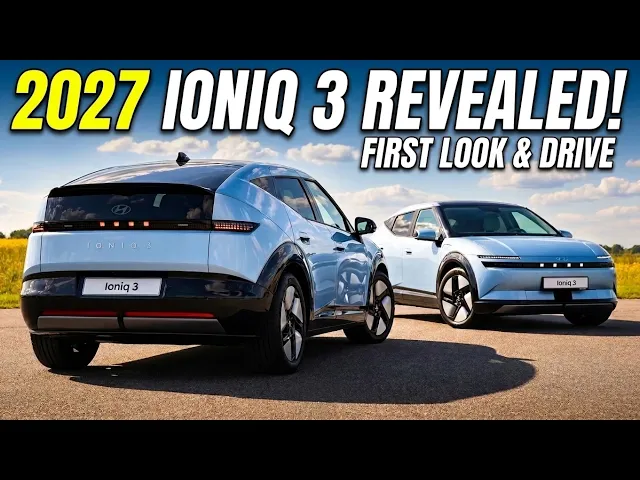
The 2027 Hyundai Ioniq 3 represents a pivotal moment in the global shift toward accessible electrification. Positioned strategically beneath the highly acclaimed Ioniq 5, this all-new compact electric hatchback blends futuristic design, a thoughtfully crafted living-space interior, and efficient everyday performance into a package designed to democratize electric mobility. As automakers scramble to capture the entry-level EV market, Hyundai’s latest offering aims to prove that lowering the price barrier does not mean compromising on style, functionality, or technological innovation.
- Aerodynamic Focus: Employs the new “Aero Hatch” design language to achieve an impressive drag coefficient of 0.263.
- Intelligent Cabin: A “Furnished Space” interior inspired by 1970s Italian furniture, incorporating sustainable textiles and physical buttons alongside large touchscreens.
- Capable Performance: Built on a dedicated EV platform featuring a 400-volt architecture, standard V2L, and up to 145 horsepower.
A Bold New Design Language: The Aero Hatch
Hyundai continues to push the boundaries of automotive aesthetics, and the 2027 Hyundai Ioniq 3 is no exception. Grounded in the company’s brand-new “Aero Hatch” design philosophy, this model features a highly streamlined silhouette that gracefully curves from nose to tail. This fluid contouring isn’t just for show; it allows the vehicle to achieve a drag coefficient of just 0.263. Lowering aerodynamic drag is critical for maximizing highway efficiency and extracting every possible mile from the vehicle’s battery pack.
Up front, the vehicle utilizes Hyundai’s signature pixel lighting array. A highly creative design detail is situated dead-center: four illuminated LED dots that spell out the letter “H” in Morse code, giving the front fascia an instantly recognizable identity. For buyers wanting a sportier edge, the available N-Line trim elevates the aesthetic. The N-Line adds deep-sculpted front bumpers, dramatic red interior accents, an aerodynamic rear diffuser, and a roof-mounted spoiler that lends the hatchback a hot-lap attitude.
Dimensionally, the Ioniq 3 is shorter in overall length than the conventional Hyundai i30 hatchback. However, thanks to the inherent packaging advantages of a dedicated electric platform, it benefits from an elongated wheelbase. This design choice maximizes interior volume while preserving the compact, agile exterior footprint that makes city navigation and tight parking effortless.
A Living Room on Wheels: The “Furnished Space” Cabin
Step inside, and you are greeted by Hyundai’s “Furnished Space” design concept. Rather than opting for a clinical, ultra-minimalist environment, Hyundai’s design team drew inspiration from warm 1970s Italian furniture. The result is a welcoming, environmentally conscious sanctuary that blends premium soft-touch materials with recycled textiles and bio-based fabrics. It feels less like a traditional car dashboard and more like a high-end, sustainable lounge.
Technology is front and center but integrated with care. Drivers face a high-mounted digital instrument cluster, supplemented by a primary infotainment touchscreen that spans from 12.9 to 14.6 inches, depending on the chosen trim level. Operating on Hyundai’s latest Android-based Pleos Connect infotainment system, the interface promises rapid response times, crisp graphics, and seamless smartphone mirroring.
Importantly, Hyundai has resisted the industry trend of burying all secondary controls inside screen menus. The 2027 Hyundai Ioniq 3 features physical buttons and toggle switches for primary climate functions, volume control, and heated seats. This ensures that drivers can adjust critical cabin settings intuitively without taking their eyes off the road.
Passenger comfort is highly optimized. The completely flat floor guarantees generous legroom for those riding in the back. Cargo practicality is equally strong, with a luggage compartment offering up to 441 liters of space, alongside a clever, dual-level hidden underfloor storage area to keep charging cables and valuables neatly organized.
Real-World Performance and Everyday Usability
The 2027 Hyundai Ioniq 3 is engineered around a single-motor, front-wheel-drive configuration powered by a reliable 400-volt electrical architecture. Customers can choose between two distinct battery capacities to align with their driving needs and budget limits. The Standard Range variant prioritizes urban agility, producing 145 horsepower and completing the 0 to 100 km/h sprint in roughly 9.0 seconds. Those eyeing longer commutes can opt for the Long Range version, which optimizes efficiency to deliver 133 horsepower and a 0 to 100 km/h time of approximately 9.6 seconds.
While these figures won’t challenge performance hot hatches, both variants provide the instantaneous, quiet torque delivery that makes EV driving exceptionally smooth in stop-and-go traffic. When it is time to plug in, the Ioniq 3 utilizes DC fast charging to power its battery from 10 to 80 percent in approximately 29 to 30 minutes, keeping charging downtime to a minimum during longer road trips.
Adding to its utility is the inclusion of Vehicle-to-Load (V2L) technology. This versatile feature allows the vehicle to act as a mobile generator, providing power from the high-voltage battery to operate laptops, electric bicycles, camping gear, or even essential household appliances during power outages.
| Metric | Details / Spec |
|---|---|
| Architecture | 400-Volt Dedicated EV Platform |
| Layout | Front-Wheel Drive (Single Motor) |
| Standard Range Output | 145 hp (0-100 km/h in ~9.0s) |
| Long Range Output | 133 hp (0-100 km/h in ~9.6s) |
| Drag Coefficient | 0.263 Cd |
| Cargo Capacity | 441 Liters (with dual-level underfloor storage) |
| Fast Charging Time | 10% to 80% in 29-30 minutes (DC Fast Charger) |
| Key Technology | V2L (Vehicle-to-Load), Pleos Connect Infotainment |
Pricing, Market Positioning, and Launch Timeline
Value is the core premise of the 2027 Hyundai Ioniq 3. In European markets, the electric hatchback is expected to land with an appealing starting price in the mid-to-high £20,000 range, instantly putting it within reach of buyers who previously found EVs financially prohibitive. Meanwhile, Australian consumers can look forward to a launch in the first quarter of 2027, with anticipated pricing positioned between 40,000 and 42,000 Australian dollars (excluding on-road costs).
- Unique “Aero Hatch” exterior design with Morse-code lighting.
- Intelligent, warm cabin with physical controls for core tasks.
- Standard V2L technology for ultimate utility.
- Highly competitive price point for an entry-level EV.
- Modest acceleration times (9.0 to 9.6 seconds to 100 km/h).
- Slower 400V charging compared to the rapid 800V system on the Ioniq 5.
The 2027 Hyundai Ioniq 3 is a masterclass in compromise. By retaining physical buttons, prioritizing sustainable comfort, and deploying efficient aerodynamics, Hyundai has crafted a highly competitive, affordable EV that feels premium without demanding a premium price tag.
Frequently Asked Questions
What is the starting price of the 2027 Hyundai Ioniq 3?
In Europe, the Ioniq 3 is expected to start in the mid-to-high £20,000 range. For the Australian market, pricing is estimated to sit between 40,000 and 42,000 AUD before on-road costs.
How quickly can the Ioniq 3 charge its battery?
Thanks to its 400-volt architecture, the Ioniq 3 can charge from 10 to 80 percent in approximately 29 to 30 minutes when using a compatible DC fast charger.
What is the difference between the Standard and Long Range versions?
The Standard Range version produces 145 horsepower and accelerates from 0 to 100 km/h in roughly 9.0 seconds. The Long Range version, tuned for maximum driving distance, produces 133 horsepower and takes about 9.6 seconds to reach 100 km/h.
Does the 2027 Hyundai Ioniq 3 have V2L capability?
Yes, Vehicle-to-Load (V2L) comes standard, allowing owners to power external appliances, laptops, and outdoor gear directly from the car’s battery pack.
| Key Vehicle Data | |
|---|---|
| Status / Type | Confirmed |
