
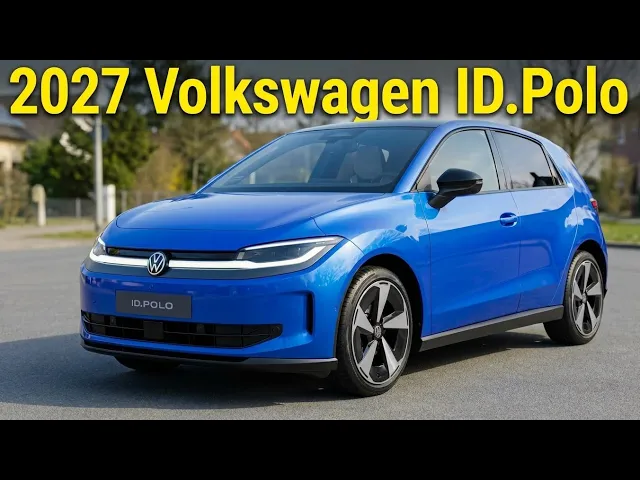
What if the future of electric cars wasn’t expensive, complicated, or out of reach? What if it was simple, practical, and built for everyday people? The upcoming 2027 Volkswagen ID. Polo promises to deliver exactly that: a compact, highly efficient, and deeply accessible electric hatchback designed to redefine how mainstream buyers transition to electric mobility. For decades, the conventional Polo has stood as a bastion of efficient, reliable urban driving; now, Wolfsburg is preparing to electrify this exact heritage for the modern age.
- Positioned below the ID.3, the ID. Polo is aimed to be one of the most affordable and accessible electric vehicles in the global Volkswagen lineup.
- It is expected to sit on an evolved, cost-effective version of the modular MEB platform, optimizing interior packaging and manufacturing costs.
- Range targets hover around 300 to 400 km, with DC fast charging capable of restoring 10% to 80% battery capacity in under 30 minutes.
Democratizing the Electric Vehicle Ecosystem
For several years, the transition to electric mobility has been heavily skewed toward high-end SUVs and premium luxury sedans. The 2027 Volkswagen ID. Polo represents a critical pivot point, aiming to bring electric mobility to millions of drivers who are unwilling or unable to spend premium dollars. Rather than treating an affordable EV as an afterthought, Volkswagen is focusing on high packaging efficiency to ensure this model does not feel like a compromise.
By positioning this vehicle below the current ID.3, Volkswagen aims to capture the high-volume B-segment market that has traditionally relied on internal combustion power. This strategy targets urban commuters, first-time car buyers, and small families who require reliable, everyday transportation without the premium overheads. The focus remains on functional engineering, maximizing value, and lowering the barrier to clean energy transport.
Sleek Aerodynamics and Clean Styling
Visually, the 2027 Volkswagen ID. Polo is expected to adopt a modern and clean design language that reflects its membership in the progressive ID family. Up front, a futuristic look is created by slim LED headlights connected by a signature horizontal light bar. Its design will feature short overhangs and a long wheelbase relative to its overall footprint. This architectural trick, unique to dedicated EV platforms, pushes the wheels to the absolute corners of the vehicle.
Because maximizing range on a compact platform is highly dependent on wind resistance, aerodynamics will play a huge role in the vehicle’s exterior styling. Smooth body surfaces, optimized wheel designs, and a raked front windshield help to slice through the air with minimum resistance. This aerodynamic focus ensures that the battery’s energy is used to propel the vehicle rather than fight drag, giving this small hatchback a more premium, settled presence on the road.
Inside the Intelligent, Minimalist Cabin
Step inside, and the cabin approach reflects a clear evolution. Volkswagen is taking a minimalist approach, characterized by a clean dashboard and a large central touchscreen layout. Crucially, the brand has taken customer feedback to heart from earlier ID products. Drivers can expect significantly more intuitive interior controls, physical tactile integrations, and refined software to address past criticisms of capacitive touch layouts.
Despite its outer dimensions being smaller than a typical compact sedan, the dedicated EV platform permits an exceptionally roomy cabin. The absence of a traditional transmission tunnel ensures completely flat floors and highly versatile seating arrangements. Additionally, the cockpit will leverage wireless Apple CarPlay, Android Auto, over-the-air (OTA) system updates, and robust voice command integration, transforming this affordable commuter into an intelligent mobile companion.
Next-Gen MEB Performance and Daily Utility
Under the skin, the 2027 Volkswagen ID. Polo is anticipated to leverage an evolved variant of Volkswagen’s MEB architecture. This updated platform prioritizes lower production complexity and increased battery cell density. While it won’t be an outright sports car, the immediate delivery of electric torque will make urban zip and highway merging effortless.
| Metric | Details / Spec |
|---|---|
| Platform Architecture | Evolved MEB (Modular Electric Drive Matrix) |
| Target Power Output | 150 to 200 Horsepower |
| Expected Range | 300 to 400 km (WLTP estimated) |
| Fast Charging Speed | 10% to 80% in under 30 minutes (DC) |
| Drive Configuration | Single Motor (Fwd/Rwd configurations expected) |
Power outputs are projected to span from 150 to 200 horsepower, giving the hatchback excellent throttle response. Range-wise, the target of 300 to 400 km covers the vast majority of weekly commutes without creating “range anxiety.” When it is time to charge, the efficient battery pack will support rapid DC charging, minimizing downtime during longer road trips and keeping the vehicle on the move.
- High-value focus makes clean electric driving accessible to a mainstream audience.
- Significant upgrades to interior usability and software responsiveness based on consumer input.
- Clever EV packaging maximizes cabin legroom and cargo capacity within a compact footprint.
- Modest power output and range limits may not appeal to long-distance highway drivers.
- Will face fierce competition from a growing list of affordable, entry-level imported EVs.
The 2027 Volkswagen ID. Polo is the practical, everyday EV that the automotive market desperately needs—a return to VW’s core philosophy of creating the true ‘people’s car’ for an electrified generation.
Frequently Asked Questions
What is the estimated price of the 2027 Volkswagen ID. Polo?
While final pricing remains unannounced, it is designed to sit below the ID.3 as an entry-level EV, targeting a highly affordable starting price point to compete directly with budget gasoline hatchbacks.
What platform is the ID. Polo based on?
The vehicle is expected to sit on an evolved, highly optimized version of Volkswagen’s MEB architecture, tailored specifically for compact dimensions and affordable manufacturing costs.
How long will it take to charge the 2027 Volkswagen ID. Polo?
Thanks to integrated DC fast charging capabilities, the ID. Polo is expected to charge from 10% to 80% battery capacity in under 30 minutes, making public charging stops quick and convenient.
| Key Vehicle Data | |
|---|---|
| Status / Type | Confirmed |
